salakhalimunmountain.com – Stepping into the emerald shadows of the Halimun Salak National Park is like entering a grand, living cathedral where the music never truly stops. If you listen closely, past the rhythmic cicada calls and the distant sound of rushing rivers, you will hear the true voices of this ancient wilderness. These are the rare birds of Mount Salak Halimun National Park, the feathered spirits that define the soul of one of Java’s last great primary rainforests. As a guide who has spent countless mornings waiting for the sun to pierce through the heavy rainforest air, I have learned that bird watching here is not just a hobby; it is a form of meditation. The birds of this region are elusive, often hidden within the dense canopy light filtering through leaves, requiring a quiet heart and a patient eye to discover. Every flash of color and every unique whistle tells a story of survival, evolution, and the delicate balance of an ecosystem that has remained largely unchanged for millennia.
The Majestic Presence of the Javan Hawk Eagle
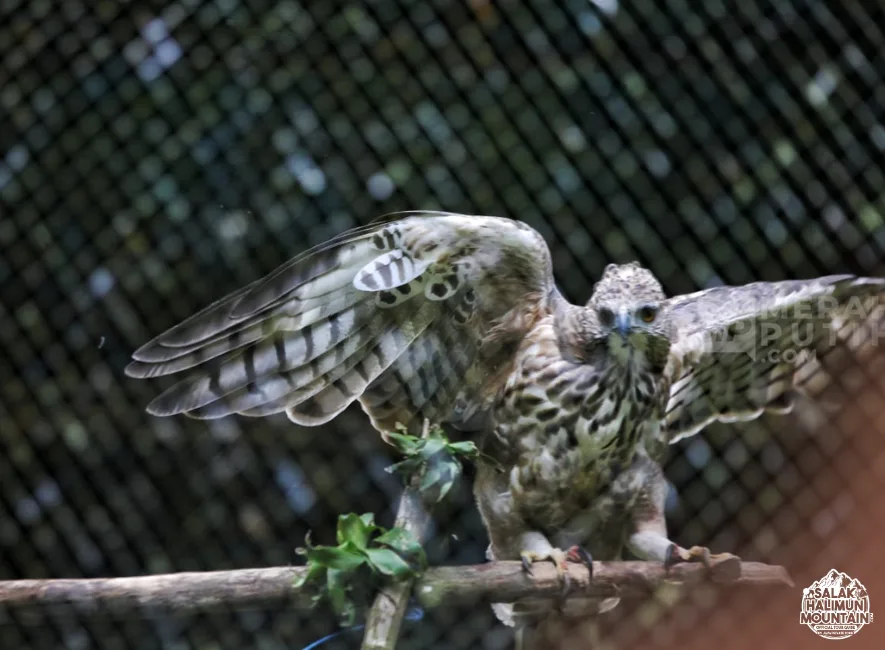
When we talk about the rare birds of Mount Salak Halimun National Park, the conversation must begin with the sovereign of the skies, the Javan Hawk Eagle. This magnificent raptor is more than just a bird; it is a national symbol of Indonesia, believed to be the inspiration for the Garuda. Spotting one soaring over the deep volcanic ridges of Mount Salak is a moment that stays with you forever. They prefer the high, undisturbed canopy of primary forest, where they can survey their kingdom with piercing eyes. The heavy rainforest air often carries their sharp, high pitched screams across the valleys, a sound that signals the raw power of the mountain’s peak predators. Witnessing a Javan Hawk Eagle in its natural habitat is a testament to the success of conservation efforts within the park boundaries.
To see these eagles, one must venture into the higher elevations where the forest is at its most rugged. They are masters of camouflage, often perched silently on the branches of the massive Altingia excelsa trees, waiting for the perfect moment to dive. Their intricate brown plumage and striking crest make them a dream for any wildlife photographer, though they rarely grant long audiences. As we trek through the soft mud trails, we always keep our binoculars ready, scanning the skyward openings in the canopy. The eagle represents the resilience of the Javanese wild, a rare bird that demands our utmost respect and protection. It is a reminder that in the heart of Salak Halimun, the ancient laws of nature still hold sway over the modern world.
The Elusive Song of the Javan Cochoa
Deep within the mist shrouded slopes, where the moss covered rocks are perpetually damp, lives one of the most mysterious rare birds of Mount Salak Halimun National Park, the Javan Cochoa. This bird is a true gem of the highlands, draped in deep purples and blues that seem to shift color depending on how the dense canopy light hits them. The Cochoa is notoriously difficult to find, preferring the quietest, most undisturbed parts of the rainforest. Its song is a soft, haunting whistle that seems to come from everywhere and nowhere at once, blending seamlessly with the whisper of the wind through the leaves. For many birders, a glimpse of the Javan Cochoa is the ultimate prize, a reward for those willing to trek deep into the Halimun sector.
The Cochoa is an indicator species, meaning its presence tells us that the forest is healthy and the ecosystem is intact. They feed on small fruits and insects found among the leaf litter and low branches, moving with a ghostly grace that makes them nearly invisible to the untrained eye. When we lead expeditions to find these rare birds, we emphasize the importance of silence. Any loud noise or sudden movement will cause the Cochoa to vanish into the shadows. Sitting quietly on a fallen log, surrounded by the heavy rainforest air, and waiting for that first purplish flash is a lesson in the beauty of the slow path. It is these quiet moments that reveal the true magic of Mount Salak, where the rare and the beautiful wait for those who have the patience to seek them out.
The Vibrant Colors of the Javan Trogon
If the Cochoa is the ghost of the forest, the Javan Trogon is its living flame. Among the rare birds of Mount Salak Halimun National Park, the Trogon stands out for its breathtaking beauty. With a chest as red as a sunset and a back of shimmering green, it looks like a creature from a tropical fairy tale. Trogons are unique in that they often sit perfectly still for long periods, their large, dark eyes watching the forest for insects. This stillness makes them excellent subjects for photography, provided you can find them. They favor the middle story of the forest, where the light is dim and the vines are thick, creating a perfect backdrop for their brilliant plumage.
Finding a Trogon often feels like a happy coincidence, but it is actually the result of knowing the forest’s secrets. They love the damp areas near rushing rivers and small forest streams. As we walk, we listen for their soft, bark like calls, which are much more frequent than their sightings. The Javan Trogon is a sedentary bird, meaning it doesn’t travel far, so once we identify a nesting site, we can often return to see them again. Their presence adds a splash of vivid color to the otherwise green and brown world of the deep woods. They are a reminder that even in the most rugged terrain, nature finds a way to create delicate, stunning beauty that thrives in the heavy rainforest air.
The Endangered Beauty of the Silvery Gibbon and Bird Symbiosis
While we focus on the rare birds of Mount Salak Halimun National Park, it is impossible to ignore how they interact with the other inhabitants of the forest. The Javanese rainforest is a complex web of life. For instance, many birds follow the Silvery Gibbons as they move through the canopy. As the gibbons swing from branch to branch, they disturb insects and fruit, providing an easy meal for smaller birds like the Javan Sunbird or various flycatchers. This symbiotic relationship is one of the many wonders of the Halimun Salak ecosystem. Observing this interaction provides a deeper understanding of why protecting every part of the forest is vital for the survival of these rare avian species.
The birds of Salak Halimun are also essential for the forest’s regeneration. Many of the rare birds we seek are fruit eaters that help disperse the seeds of giant rainforest trees across the volcanic slopes. Without the Hornbills and the Fruit Doves, the forest would eventually lose its diversity. This is why our tours always promote ecological respect and responsible trekking. Every time we step onto the soft mud trails, we are entering a delicate nursery of life. By staying on the paths and minimizing our footprint, we ensure that the rare birds of Mount Salak Halimun National Park have a safe place to nest and thrive for generations to come. The forest provides for the birds, and in return, the birds provide for the forest.
The Haunted Call of the Javan Owlet
As the sun begins to dip below the horizon and the dense canopy light fades into a deep violet twilight, a new cast of rare birds of Mount Salak Halimun National Park begins to emerge. The Javan Owlet is a small but fierce nocturnal hunter that makes its home in the hollows of ancient trees. Its call is a series of soft, rhythmic hoots that can be heard echoing through the pine plantations and primary forests of Mount Salak. Seeing an owlet requires a night trek, an experience that completely changes your perspective of the rainforest. In the dark, the heavy rainforest air feels thicker, and every rustle in the leaves becomes an mystery to be solved by the light of a headlamp.
The Javan Owlet is a master of the night, its feathers specially adapted for silent flight so it can surprise its prey. Despite its small size, it is a formidable predator of insects and small lizards. Finding one perched on a branch, its yellow eyes glowing in the dark, is a thrilling experience. Night birding in Salak Halimun allows us to see the creatures that shy away from the daylight. It is a time when the forest feels most alive, filled with the sounds of nocturnal wildlife that create a symphony entirely different from the daytime chorus. The owlet is a sentinel of the night, a rare bird that reminds us that the mountain never truly sleeps; it only changes its face.
The Resilient Javan Green Magpie
Among the most critically endangered of all rare birds of Mount Salak Halimun National Park is the Javan Green Magpie. This bird is as intelligent as it is beautiful, with a striking apple green plumage and a dark mask across its eyes. Unfortunately, its beauty and its ability to mimic other sounds have made it a target for the illegal bird trade in the past. Today, the Halimun Salak National Park is one of its last strongholds. Seeing a Green Magpie in the wild is a privilege that few get to experience. They are social birds, often moving in small groups through the lower canopy, their bright colors flashing like emeralds against the dark foliage.
Conservation programs within the park are working tirelessly to protect the Magpie and its habitat. When we encounter these birds during our treks, we do so with a sense of reverence. Their survival is a delicate thread that we must all help to protect. The Green Magpie is a vocal bird, and its presence brings a sense of liveliness to the forest. Its complex calls and mimicked sounds are a delight to listen to, showcasing the incredible cognitive abilities of these rare avian residents. Protecting the Javan Green Magpie means protecting the very essence of the Javanese wild, ensuring that its brilliant green wings continue to beat through the heavy rainforest air of the Salak Halimun highlands.
Conservation Efforts and the Future of Salak Birds
The survival of the rare birds of Mount Salak Halimun National Park depends entirely on the continued protection of their habitat. Mount Salak and Mount Halimun act as critical “islands” of biodiversity in a rapidly developing province. The national park status provides a legal shield against logging and encroachment, but the real work is done by the rangers and local communities who monitor the nests and prevent poaching. As visitors, we play a role in this conservation effort too. By choosing ethical tours and supporting the local economy, we provide an alternative to the exploitation of the forest. The more value we place on a living bird in the tree versus a bird in a cage, the brighter the future for these rare species becomes.
We encourage every trekker to learn about the birds before they arrive. Understanding the challenges faced by the Javan Hawk Eagle or the Green Magpie turns a simple hike into a mission of awareness. When you see these birds with your own eyes, the abstract concept of “conservation” becomes a tangible reality. You see the feathers, you hear the song, and you feel the heavy rainforest air that sustains them. This connection is what drives people to become advocates for the nature. The rare birds of Mount Salak Halimun National Park are not just attractions; they are the living heritage of West Java, a treasure that belongs to all of us and one that we must defend with every step we take on the mountain trails.
Tips for Successful Bird Watching in Salak Halimun
To maximize your chances of seeing the rare birds of Mount Salak Halimun National Park, preparation is key. First and foremost, you must arrive early. The “dawn chorus” is the peak time for bird activity, as species emerge to feed and defend their territories. By the time the midday sun is high, many birds retreat into the cooler, deeper parts of the canopy. Secondly, wear neutral colors that blend into the forest environment. Bright clothing can startle the more sensitive species, causing them to fly away before you even get your binoculars focused. Patience is your most important tool; sometimes the best way to see a rare bird is to simply sit still by a rushing river and let the forest come to you.
A good pair of binoculars and a local guide are also essential. The dense canopy light can make it difficult to see colors and patterns, and a guide’s ears are trained to pick out specific calls from the background noise of the jungle. We know the favorite fruiting trees and the quiet nesting sites that aren’t on any map. Most importantly, always follow the principles of responsible trekking. Never use playback calls to lure birds, as this can stress them and distract them from their natural behaviors. Respect their space, keep your distance, and leave nothing but footprints. This ethical approach ensures that the rare birds of Mount Salak Halimun National Park remain undisturbed, allowing them to continue their ancient dances for years to come.
Conclusion: The Call of the Wild
As we finish our journey through the mist and the green, the voices of the rare birds of Mount Salak Halimun National Park linger in the mind. They are the heartbeat of the volcano, the spirits that give life to the heavy rainforest air and the moss covered rocks. From the regal eagle to the tiny owlet, each bird is a piece of a magnificent puzzle that we are only beginning to understand. To walk these trails is to witness a world that is both fragile and incredibly powerful. We invite you to leave the noise of the city behind and join us under the dense canopy, where the birds are waiting to share their songs with those who know how to listen. This is the real Java, raw and beautiful, and it is a world that everyone should experience at least once.
So, if you’re ready to explore the wonders of Mount Salak Halimun, head over to our ONLINE BOOKING PAGE and let’s start planning your adventure. Or simply CLICK THIS LINK to chat with us on WhatsApp.
With our team, you’re not just getting a guide; you’re gaining a local friend who will ensure your trip is nothing short of extraordinary.